The tension I see with
leaders who give a damn
People who give a damn create with intent.
They want to add something meaningful to the world; build something out of nothing. They want that for the people they create for, and the people they build with. And they want to build a meaningful and fulfilling life for themselves, too. There is nothing wrong with that.
But many of these founders can attract attention, and some even see their initiatives grow rapidly. Yet as they build their solutions with their teams, a more durable brand foundation is often overlooked. If you don’t have this in place, participation stalls and impact can be limited.
Especially in a world where everything starts to look the same. Brands speak the same, look the same, smell (stink!) the same. Visibility is often mistaken for meaning and when this is thin, trust weakens and engagement fades.
Without that, systemic change doesn’t last.
So how much is your impact worth then?

What I believe makes impact last
In my experience from working with clients on four continents, organizations and their leaders don’t really fail because they lack ambition. Founders can dream and do at the same time. They fail because their ambition isn’t clear enough for others to follow.
If you want to have durable impact, you need a brand that people trust. Initiatives endure when they becomes shared stories. A story you can identify with and rally behind, capable of becoming a movement.
Research consistently shows that trust enables engagement. If you feel that you belong to something, you're more likely to stay involved. And when you participate, you strengthen and expand a brand’s capacity to pursue its mission in the long term. To me, that’s what matters most: making it last.
When these things reinforce one another, we create the conditions for you to become a household name built to last.

Where we choose to make a difference
At Momkai, we don’t believe we can change society directly. But we can pick and choose the projects and clients we work for.
We choose those that we feel can, on the one hand, really influence society for the good and have a positive impact, and on the other hand, really need help strengthening their brand foundation and building a core identity. We make sure your identity and your interactions match. Because only then does sustained action become possible.
Our leverage point is helping these leaders build that foundation. Making their ambition clear enough for others to understand and participate in.

How memberful design makes lasting impact possible
For too long, my industry has talked about the user experience, getting people hooked on your product, addicted to an algorithm, thinking of people as individual "users", rather than as part of groups, communities, and a larger whole. We want to create a shared purpose around a member experience that holds meaning for them. The mechanism we use for that is what I call memberful design.
In all the noise of the world, we cultivate calm by designing clarity and coherence. Through brand strategy, narrative, and experience design, we help collectives and companies articulate who they are, align how they express themselves, and create the pathways people need to engage.
To build a brand then becomes like building the streets and buildings of your own city. You make strategy visible and credible, and gradually grow it into a world of its own. We turn ambition into a world that you want to live in, that you can recognize, and that you can rally around.
That means design that invites people not just to consume, but to contribute, to support, and to stay. They become part of a purpose that holds meaning for them. If you do that right, it strengthens your retention, revenue, resilience, and expands your team’s capacity to pursue the mission over time.
Simply said, you get more done together.
When we work with organizations, we don’t just design how they look. We clarify what they stand for, align how they speak, and build the structures to make their style scalable and their story memorable.
There are two disciplines behind this mechanism: taste and willpower. The taste to build something beautiful and create something that’s special. Plus the willpower to carry it through to launch and get it done.
I want brands to become iconic.

Making doing good look good
Our understanding of trust, belonging, and participation is grounded in 24 years of building brands across Europe, North America, Africa, and Japan, as well as in launching and sustaining global platforms ourselves, including two world record-breaking crowdfunding campaigns.
♦ ♦ ♦
As founder of Momkai (2002), I helped co-found De Correspondent (started in 2012, publicly launched in 2013), now the third-largest member-funded news organization in the world after The Guardian and Die Zeit. It has sustained ad-free investigative journalism through direct member support and built a publishing house where every book has become a bestseller, reflecting the resilience of a member-driven model. The Momkai team helped shape the brand, platform, books, and campaigns and continues to guide its evolution.
♦ ♦ ♦
Next, I co-founded The School for Moral Ambition (started in 2022, publicly launched in 2023), with New York Times best-selling author Rutger Bregman and others, which has grown to 25,000+ members across 150 countries. Its expansion across Europe and into the US, including offices in Brussels and New York, right on Wall Street, and its first university fellowships at Harvard, Stanford, and Princeton, illustrates how shared purpose can scale across cultures when designed intentionally. Momkai shaped its branding, covers, launch documentary series, and its online platform from inception.
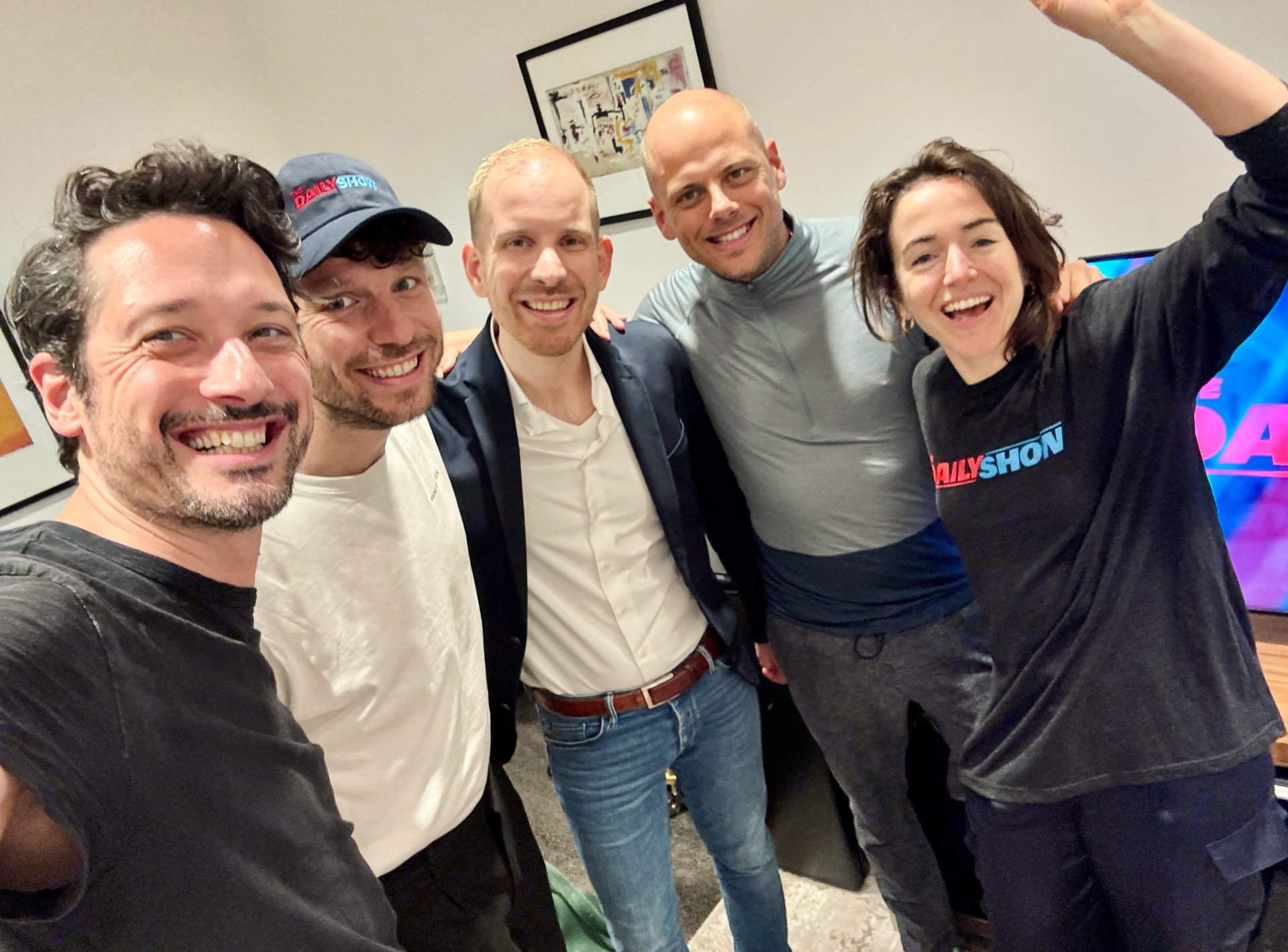
Behind the scenes at The Daily Show with Jon Stewart in New York, 2025.
The co-founders of The School for Moral Ambition, from right to left: Julia van Boven, Ruben Timmerman, Rutger Bregman, Jan-Willem van Putten, and yours truly, Harald Dunnink.
For over two decades, Momkai has operated in a volatile creative industry. We have sustained long-term client partnerships, built work that entered the National Archive, collected recognition from the Red Dot Design Awards, the European Design Awards, the Webbys, D&AD (etc.) and attracted talent from five continents. For creative communities, we co-founded and branded a design podcast, a design master's program, and a design collective.
♦ ♦ ♦
The lesson has been consistent: be bold in your brand strategy, design your identity to be iconic, and build a resilient community, because beauty and belonging can make the thing you put so much effort and so many ideas into truly endure.
Make it last.

We meet founders at pivotal moments: before you launch, after you’ve grown quickly, or when what you’ve built has outgrown the story around it.
Harald Dunnink
